McKenzie and Willamette River Steelhead Report: Fall is Prime Time

Willamette River Steelhead

The fishing in the upper Willamette basin for summer steelhead has been outstanding lately. The conditions have been perfect: low, clear water, lots of overcast, and cool temperatures. These factors, combined with the bumper crop of steelhead that have returned to area rivers this year, are a recipe for success.

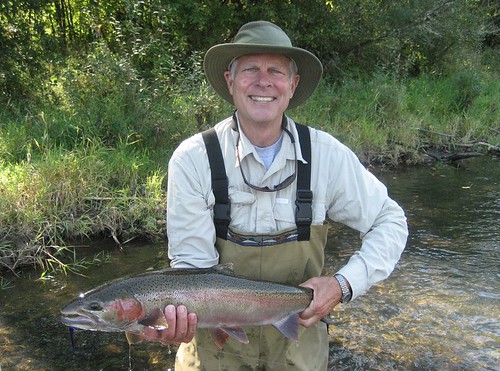
Jim Reichman with Willamette Steelhead, cropped

I have been swinging flies exclusively, varying the line and fly with the speed and depth of the pool as well as the light conditions. In low light conditions, I have been bringing fish to the surface on skated dry flies and relatively small, low-water dress wet flies. In the fall, direct sunlight on the water seems to be less of an issue than it is earlier in the season. Even on sunny afternoons, the fish have been moving well for a small leech swung on a sink tip.

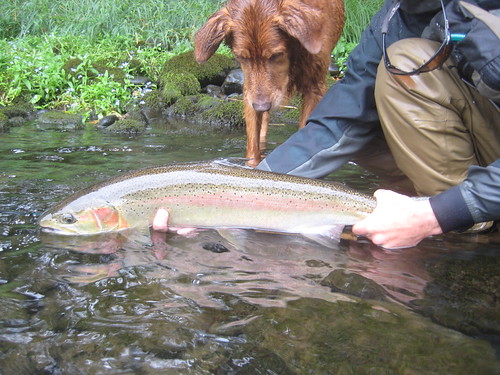
Bright Willamette River Hen

While large and heavy flies certainly have their applications, less is often more when it comes to fly selection. When the water is low, clear, and in the optimal temperature range (between 50 and 60 degrees farenheit), small, slight and inobtrusive flies will often out-produce the enormous offerings that are so en vogue currently.

Willamette River Steelhead, cropped

The fishing for summer steelhead on the rivers around Eugene will likely stay good until fall rains drive them up and out of shape. Anyone who is interested in getting out, learning about steelhead fishing and behavior, and experiencing some of the best fishing our area has to offer should call or email. I still have some dates available for the second half of October.

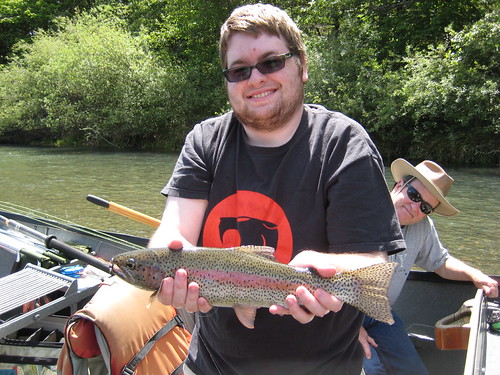
Reed Heine with a Willamette River Steelhead

1 Comment

Filed under Uncategorized

McKenzie and Willamette River Summer Steelhead Flyfishing Report: Fishing Improves as Fall Approaches

Willamette River Steelhead

It is no secret that we have had a great summer steelhead return this season in the Willamette River and its tributaries. The dog days of summer, however, are often not the most productive of the year. When air temperatures soar, water temperatures climb, the sun hangs high in the sky, and the wind blows, the fish just don’t bite as well. A fish has to be in the right mood to take a swung fly. Unlike a trout that is feeding, a steelhead’s motives for biting a fly are opaque. Is it aggression, inquisitiveness, an instinctive feeding response, or a combination thereof? In any event, it is clear that happy fish bite better, and the cool, overcast, and even rainy weather of late has done a lot to improve their mood.

Willamette River Steelhead

After a summer of marginal water conditions, the levels on both the McKenzie and Willamette are perfect, and the clarity is great. Though it is hard to go wrong with a sink tip and some sort of leech pattern, I have had good success recently fishing traditional wet flies (#2-#6) on a clear tip or floating line. Yesterday I took the fish pictured below on a riffle-hitched muddler skated on the surface. I have caught good numbers of steelhead using dry flies on other rivers like the N. Umpqua and Deschutes, but in the past haven’t spent a lot of time fishing them on our local streams. This was one of the best grabs in my steelheading career. The fish threw itself at the dry fly with all the fury its 30 inches and 10 pounds could muster. I have seen a lot of exciting fishing scenarios unfold, and pride myself on maintaining my composure in the heat of the battle. The way this fish took my fly, however, left me slack-jawed.

McKenzie River Steelhead

On average, the fall is certainly the most productive time of year to flyfish for steelhead on the McKenzie and Willamette Rivers. The reason the fishing has been so good the last few days is because of an early dose of fall conditions: low, clear, cooler water, overcast, showers, and light pressure. I am sure that we will have another dose or two of summery weather before fall is here for good, but the good news is that we have two more months of prime conditions to look forward to. Winter will be here all too soon. Now is the time to get out there, enjoy the cooler weather, and catch a few fish.

McKenzie River Steelhead

I still have some dates available this month and next, if anyone out there is interested in experiencing some of the best steelhead flyfishing our area has to offer, please call or email. I am an expert spey caster and casting instructor, and can show you how to effectively fish water of various types, and more importantly, how to read and select water to focus your efforts.

McKenzie River Steelhead

1 Comment

Filed under Uncategorized

Willamette Valley Summer Steelhead Report

Willamette River Steelhead

This has been an interesting summer steelhead season so far in the southern end of the Willamette Valley. We have had the best return of summer steelhead since 2004, but because the Army Corps of Engineers has been draining all the reservoirs in the southern Willamette basin in order to work on the dams, the river has been running about a foot higher than normal most of the season. To the uninitiated, a foot of water doesn’t sound like a whole lot, but it makes a dramatic difference in the fishing. Very few of the spots that I would fish given normal summer or fall flows are producing. The fish I am finding are still sitting in classic, walking-paced, relatively shallow lies. These lies are just in different spots than they normally would be this time of year.

Willamette River Steelhead

Because of the high water, I am still having most of my success with various leech patterns and tube flies with a bulky profile fished on a sink tip. Today, however, I was disappointed that I didn’t have a rod rigged with a floating line in the boat. I was fishing with my buddy Kyle, and while sitting on anchor in a tail-out, we observed a steelhead rising to Pale Morning Duns. It is likely that a fish this frisky would have pounced on a skater, but Kyle settled for catching it on a sink tip. I have certainly made worse compromises.

Willamette River Steelhead

By the end of August, flows on the Willamette and its tribs are projected to drop to a normal summer level and stay there through the end of the season. In years past, the fall fly fishing on the Willamette for steelhead has been very good at times, but variable day to day because the flows typically change unpredictably with the whim of the Army Corps of engineers. This year, having already drawn reservoir levels down to service the dams, it is likely that the Corps will keep river levels low and steady throughout September and October. These will be perfect conditions for fly anglers.

Willamette River Steelhead

This time of year, the sun is up early and high in the sky. Unless your are fishing a canyon river or one with high banks, the window of opportunity for morning shade is limited. While I have caught steelhead in the grey dawn of morning recently, I have seen a lot more come to the fly in bright, hot, sunny, and sometimes windy conditions. Conventional steelhead theory has it that the fish chase swung flies better in the shade of morning or evening, which I believe is certainly the case. It is just that there is so much more sunshine than shade this time of year. Many fly anglers under estimate their chances for success in sunny conditions. My experience is that sun on the water is certainly not a deal-breaker, and that perserverence is usually rewarded.

Willamette River Steelhead

If anyone is interested in flyfishing the McKenzie or Willamette for summer steelhead, please let me know. I have a good deal of availability throughout August, September, and parts of October. This type of fishing is one of my areas of expertise. If you are a trout angler and are looking to learn steelhead techniques and tactics, a guided fishing trip is a great way to get a jump-start on success. Many fly anglers spend their first few seasons of steelhead fishing in a protracted, misguided and aimless hunt for the silver unicorn. This is not always a fish of a thousand casts, and learning how and where to focus your efforts will dramatically improve your cast to steelhead ratio.
1 Comment

Filed under Uncategorized

McKenzie and Willamette River Fly Fishing Report: Opportunities Abound

Willamette River Wild Rainbow

Every year as we pass the summer solstice, flyfishing opportunities for trout and steelhead abound in the Willamette Valley. There are good numbers of summer steelhead in both the McKenzie and Willamette, and after a lot of rain in late May and early June, the flows are beginning to approach summer levels. As the water falls into shape and warms, fly tactics often start to out perform the gear and bait approach that is more popular with the majority of local anglers. Now is the time to get out and swing for chrome, there are a lot of summer steelhead in the North and South Santiam, as well as the McKenzie and Willamette.

Willamette River Steelhead, cropped

Willamette Steelhead and whacker
(Hatchery fish are for whackin’)

The fishing for wild trout on the McKenzie and Willamette has also been good. On cloudy days a solid hatch of Grey Drakes has been coming off in the afternoon, bringing good fish to the surface. The When the sun is out, however, the dry fly fishing is less consistent. In bright conditions I am finding more of the good fish sub-surface. The green caddis hatch lingers on on the upper McKenzie and Middle Fork of the Willamette, and some adult Golden Stones are starting to show. A few days ago, I saw a good carpenter ant hatch, with decent numbers of these terrestrials on the water, and the trout showing keen interest in them.

Willamette River Wild Rainbow

Leave a comment

Filed under Uncategorized

Deschutes River Salmonfly Photos

I thought I would share a few photos that Paul Tsang, a guest I fished with on a recent multi-day Deschutes River trip, was kind enough to send along to me.

Deschutes River Redside, ate a Salmonfly Adult, cropped

Deschutes River Redside with Salmonfly in his Grill

Deschutes River Redside with Salmonfly in his Grill

Deschutes River Redside with Salmonfly in his Grill

It was a great Salmonfly season on the Deschutes this year, and we have the rest of the season to look forward to. Soon, the trout will be keyed in on the river’s prolific hatches of small caddises and mayflies, and will stay on them through the fall. Later this month, the vanguard of the summer steelhead run will start to make its way upstream from the mouth of the Deschutes. The forecast is for another great run of summer steelhead on the Deschutes River. If anyone is interested in doing a guided trip down the Deschutes this season, let me know and we will put something together. Some of the prime dates are already booked, but I have some holes in the schedule here and there. Come enjoy some of the best fly fishing for trout and steelhead that Oregon has to offer!

Leave a comment

Filed under Uncategorized

Deschutes River Fly Fishing Report: The Trout are Hungry Despite High Water

Deschutes River Redside, cropped

Yesterday I finished a five day trip down the Deschutes from Warm Springs to Maupin. It ended up being a great trip, but conditions did not look particularly encouraging as we drove to the launch on the first morning. Over the five previous days, a series of warm, moisture-laden, low pressure systems drove most rivers around Oregon out of shape. Though the Deschutes did not rise as precipitously as all the rivers on the west slope of the cascades, the water had come up almost 3300 cfs from the week before, putting it somewhere just over 7400 cfs. Trout Creek and the Warm Springs river were still running brown, and much of the lower Deschutes was off color just the day before.

I hadn’t fished the Deschutes at this flow for many years, and really didn’t know how the fishing would be. All this wet weather, however, ended up really working to our advantage. Some outfitters and many private boaters cancelled their trips, opting to wait for better water conditions. The traffic on the river was only a fraction of what it can be during the fabled stonefly hatch. On the first day of the trip, the majority of the places I would normally fish were fast and washed-out, but we did well fishing spots that had the right look given these high flows. The water gradually dropped over the course of the trip and was a very fishable color from start to finish. Over the five days of the trip, fishing ranged from decent to very good, with a number of good fish coming to the dry fly during every session. The trip was punctuated by some spectacular periods when the Deschutes River’s redsides were attacking the dry fly with abandon. By the last day of the trip, the water had receded to around 5300 cfs and many of the fishing holes were looking a lot more like themselves. We didn’t tie on a nymph the entire trip. All the normal stonefly patterns were producing: the Clark’s Stone, Norm Woods’ Special, Stimulator, and Larimer’s Golden were all effective (#6-#8).

Deschutes River Redside

Though this year’s Salmonfly and Golden Stone emergence is already winding down on the Deschutes River, the hatch will linger on a while longer yet on the upper reaches of the lower Deschutes. We saw good numbers of adult insects out still all the way down to the Dixon area. With warmer weather this week and the river dropping toward a more familiar level, the dry fly fishing should continue to be quite good.

Deschutes River Salmonfly and Imitations

Because of all the wet weather this spring the desert landscape was dappled with spots of color from blooming wildflowers. During the summer months, the Deschutes Canyon is a dry and dusty place, but the hillsides are currently a gorgeous green and resplendent with blossoms.

Deschutes River Wildflower Show

3 Comments

Filed under Uncategorized

McKenzie River Flyfishing Report: Great Trouting on the Upper Reaches Despite High Water

Western Oregon has been pummelled this week by warm and wet storm fronts. The Willamette River near Eugene and most of the McKenzie looked a lot like a stretch of the Congo I saw on a recent episode of River Monsters as I drove past them on my way upstream. Above all of its major tributaries, however, the McKenzie was running high and fast but clear.

Upper McKenzie Wild Rainbow

I did a two boater today with my friend Chris Daughters, owner of the Caddis Fly Angling Shop. We put in at Frissel-Carpenter and made our way downstream, our guests fishing any water we could find that looked slow enough to work. Neither of us knew what to expect: the river was running higher than either of us had ever fished it, and the possibility of finding a new log in the river around each corner kept us on our toes. The fishing was much better than I expected it to be today. Over the course of the day in my boat we encountered many dozen wild rainbows on dry flies and nymphs, many of which were of quite respectable size. A big stonefly nymph coupled with a possie bugger was the winning nymph rig. The possie also fished well suspended off a big dry fly, and a surprising number of nice fish ate the dry this afternoon. We were using a #8 foam golden stone that I tie.

McKenzie River rainbow trout

A high water event of this magnitude this time of year is not unprecedented. In recent years we have seen water nearly this high in late May due to a heavy snow pack coupled with warm temperatures. The difference this time is that most of this runoff is rain water and not snow melt. I have never seen the river go out of shape this time of year due to rainfall. It would be hard to blame the recent weather trends here in Oregon on global warming, global wierding is more like it.

The Deschutes fished very well early this week, but that trend has not held. I spoke to some fellow guides who got off the Trout Creek to Maupin stretch today. The river was big, brown, and nearly 7000 cfs. I am starting a 5 day trip over there on Monday, and hope that by then the river has begun to drop and clear. The Deschutes typically fishes very well this time of year when the river is much higher than typical summer flows, but 7 grand is a little excessive. The weather is supposed to dry and warm next week, and I anticipate that the fishing will be good as the water subsides.

Leave a comment

Filed under Uncategorized

Deschutes River Flyfishing Report: Big Bugs and Big Rainbows

Salmonfly

I just finished a multi-day trip on the Warm Springs to Maupin stretch of the Lower Deschutes River. Over the three day duration of the trip the dry fly fishing ranged from good to outstanding. The fish were keyed in on the salmonflies and golden stones, as one would expect this time of year. Cloud cover and some light showers in the afternoon brought some green drakes out to join the buffet.

Golden Stoneflies on the Deschutes River

One of the amazing things about the Deschutes is that it is such a robust fishery that when weather, hatches, water conditions, the moon and stars align correctly there are periods when almost the entire river is a good spot. The afternoon of the first day of the trip was one of these times. A warm afternoon with light winds brought the stoneflies out of the grass and brush and into the air, mating as they fluttered overhead. Light breezes and gusts pushed many of the bugs down onto the water. Violent rise forms were at times visible from bank to bank and the dry fly fishing was so good I began to feel sorry for the trout.

Deschutes River Redside

Hot fly patterns included many of the usual suspects like the Norm Woods’ Special and Clark’s Stone (#6-#8). I also used the Larimer’s Golden, a new pattern on the market from Idlewyld Flies, which slayed the redsides.

Fish On, Deschutes River Salmonfly Hatch

As I predicted earlier this Spring, the stonefly hatch on the Deschutes River this year has come early, and is currently two weeks ahead of schedule. I think it is likely to be a case of early ripe and early rotten. Although cooler weather the last couple of days is likely to make the hatch stall out (the bugs typically remain dormant for a while under these conditions), the stonefly hatch will probably soon be played out. I think the timing of the hatch this year is largely due to the work that the Confederated Tribes of Warm Springs and the Army Corps of Engineers recently completed on Pelton Dam. They installed a cooling tower in order to allow them to control the temperature of the water they release downstream. The water coming out of Pelton has been on average 2 or 3 degrees Farenheit warmer this Spring than it has been in years past.

Deschutes River Redside

It will be interesting to see how these changes play out over the coming years and how it influences the timing of all the hatches on the Deschutes River and even the return of its summer steelhead. Guides, outfitters, as well as recreational anglers have always planned their trips down the river based on the timing of these phenomena. In the future, we may have to plan differently. It remains to be seen.

Golden Stone on rods, Deschutes River

The most harrowing moment of the trip came on the second afternoon. As I rounded the corner to head through Whitehorse rapids, some private boaters in a wooden drift boat left the scouting point and headed into the rapids far to the left of the usual line. I hung back a little ways to give them some room and followed through about 100 yards behind them. I watched them careen off two different boat-eating rocks before running into a third rock broadside. Their boat immediately capsized. After all the excitement was over everyone was okay, but I spent over an hour rescuing one of them. Herein lies an important lesson for rookie boatmen: hire a guide or go with experienced friends. Don’t put yourself in the position these three unlucky boaters found themselves in.

Deschutes River Redside, cropped

Leave a comment

Filed under Uncategorized

Willamette Valley Summer Steelhead Report: Jurassic Planter

Matt Ramsey With Huge Willamette Buck

This morning my good friend Matt Ramsey and I fished one of our favorite stretches of a local steelhead stream. Even though we got a late start, there were no other boats out save for a few guys buzzing around in jet boats looking for springers. The weather was perfectly fishy; calm, overcast and humid. We pulled into one of my favorite runs and parked the boat to get things started. Matt hopped out and started swinging through the top of the run. We chatted as he worked out his short casts. Matt is a good friend of many years, a fellow fishing guide, a chrome magnet and taimen whisperer. We work together with some regularity but seldom get a chance to get out and fish together anymore, and this was a rare opportunity to spend the day covering the river, comparing notes and swapping stories. After Matt worked his way through the top of the run I started to fish behind him. About the time I had gotten my head out and a little bit of running line and the swing started to feel good, Matt hooked up on a something solid. His rod folded about half way through the swing, and after the first tail splash and run we were both convinced he had hooked a Spring Chinook because of the magnitude of the fish. After a few runs I was able to sucker the fish into the net long before it was exhausted. It was among the biggest summer steelhead I have ever seen in the Willamette Valley; 35 inches long and 14.5 pounds.

Matt Ramsey With Huge Willamette Buck

Catching a steelhead in the first spot of the day is always a nice way to get things started. Getting a fish like this in the net, however, lifted our spirits with an adrenaline rush that endured for a couple hours as we worked our way downstream, covering likely spots. Down river about a mile and a half in another one of my favorite spots we both had solid grabs but were unable to convert on the opportunities. Later in the afternoon I hooked, played, and landed a chrome bright summer hen of about six pounds. The little hen slammed my fly with abandon and fought brilliantly. After I landed it, however, it didn’t even look like the same species as the fish Matt had caught earlier that morning.

Willamette River Chromer, cropped

The summer run is on in the Willamette valley. With more fish coming in every day, it is time to get out there and swing for chrome.

2 Comments

Filed under Uncategorized

McKenzie and Willamette Flyfishing Report: Dry Fly Fishing Improves as Hatches Pop

I spent the last several days guiding different stretches of the Upper McKenzie and Middle Fork Willamette rivers for trout. It’s a magical time of year. With the weather on the mend, the rivers are warming and dropping just in time for some of the best hatches on the season. The big green caddis are out in force up and down the McKenzie as well as the Willamette. Yesterday I saw decent numbers of Green Drakes out along with the green caddis and various smaller caddis and mayfly species. This insect smorgasbord brought some really nice fish to the surface to feed.

Tim Becker with Upper McKenzie River Rainbow

Spring and early summer on the McKenzie and Willamette offer the best hatches of the season; big bugs that get the fish stirred-up and looking to the surface. Golden Stoneflies will soon join the mix. I have to admit that I have spent a lot of time this spring staring at strike indicators. It is a great change of pace to see the fish come up and crush a big dry fly.

Green Caddis Adult

The McKenzie Green caddis hatch is a unique one. The pupae free-emerge, often out of fast water. They swim to the surface quickly where they hop, bounce, and flutter trying to dry their wings before flying off. The fish show a real preference for this bug. I sometimes wonder how this particular species of caddis perpetuates itself, some days it seems like every adult I see emerge is gobbled by a trout or bird. Survival in numbers I suppose.

IMG_1209

It is time to get out and fish. Trout fishing conditions are ideal, and more summer steelhead are arriving in the area daily. Give me a call or email to book a trip to get out and experience some of the best fishing Oregon has to offer.

Leave a comment

Filed under Uncategorized